PSS3: Provides opportunities for children to raise questions, become aware of the scientific nature of their questions, and to investigate their questions using the scientific method
Evidence 1: Photograph
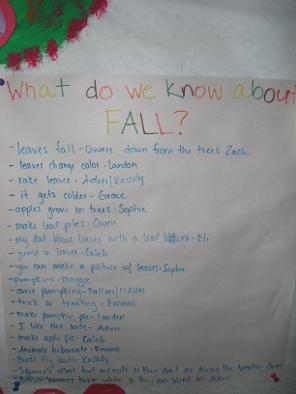
Description: This is a photograph of a question and brainstorm list created by preschoolers.
Analysis: The purpose of scientific inquiry is to acquire new knowledge. By asking children questions and recording their responses, I am able to assess each child's current understanding of a concept and then build upon that knowledge base by introducing new ideas and concepts.
Evidence 2: Mother Goose Cares About Math and Science
Description: "Mother Goose Cares about Math and Science" is an integrated curriculum of science process skills and standards-based mathematics concepts for preschool children. The course increases science and math literacy and the ability to incorporate NCTM standards, and science process skills, into daily interactions with children.
Analysis: One of the topics addressed in this curriculum guide is "What Happens Next?". As children begin to learn about sequencing and patterns, mental and cognitive growth occurs. When children take this one step further and begin to understand and create sequences, put items in order, notice cause and effect relationships, and detect patterns, they build higher level thinking skills that are needed in later learning and development. In our classroom we create a daily schedule each morning. Children use this tool as they move throughout their day at school.
Evidence 3: Photograph
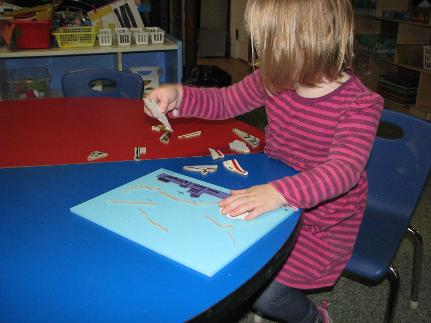
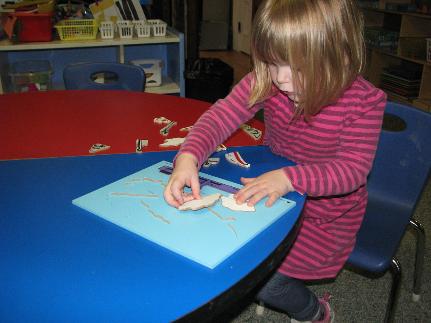
Description: J spent 25 minutes taking this puzzle apart, putting it back together, and then beginning the process all over again.
Analysis: The use of puzzles in the classroom can aid children in building endurance. At the beginning of the year, puzzles within the room are usually larger wooden puzzles with knobs. As children progress and become ready for a higher level of complexity, the puzzles change. Pieces become a little smaller and the knobs disappear. At first this change in materials is difficult. Children are unable to see how all of the pieces fit together, but as children continue to try, and as adults within their world provide scaffolding, children persist and a puzzle that once seemed impossible becomes one of their favorite activities. This ability to continue working and trying is vital when considering work of a scientific nature.
