PSMA2: Models the habits of mind of flexibility and perseverance that support mathematical learning
Evidence 1: Photographs of Puzzle Building
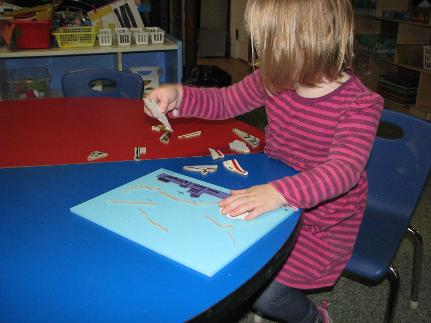
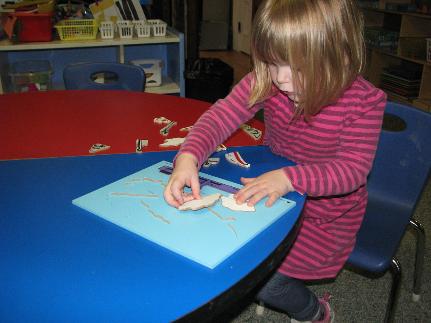
Description: These are photographs of a child working on a puzzle.
Analysis: These wooden puzzles can be somewhat overwhelming to three and four year old's. There isn't a picture in the background to help guide children as they piece the puzzle back together. Instead children must look at the shape of each piece and compare it to the edges of the puzzle, or the other colors in the puzzle, to determine how to best complete the picture. As children try to place each piece in the same location until the correct piece clicks, they learn about perseverance. They learn that by staying calm and continuing to try that eventually all the pieces will fit and a clear picture will result.
Evidence 2: Photographs of Pom Pom Toss
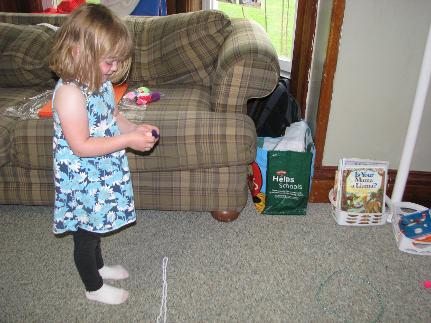
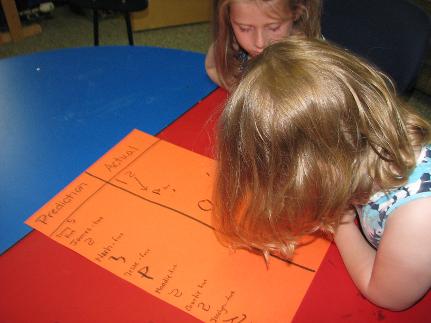
Description: These are photographs of the Pom Pom Toss game. Children are given five pom poms and are asked to predict how many will land in a specified circle. After throwing the pom poms, children record the actual number on the graph.
Analysis: Some children worry about not having the correct answer when being asked a question. As a teacher, I can help students overcome that fear by encouraging skills revolving around estimation and prediction. During this activity children learn that making a prediction, testing that prediction and recording the results is part of the inquiry process. Most importantly children learn that making a prediction, even though it might not be right, helps us to learn new things and builds greater flexibility within thinking structures.
Evidence 3: Photographs of Children Signing In
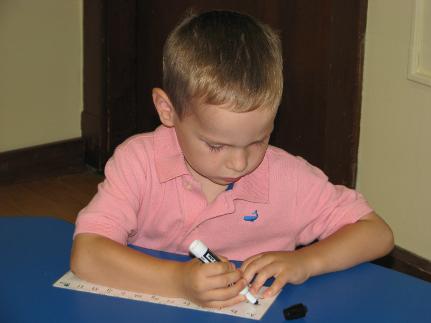
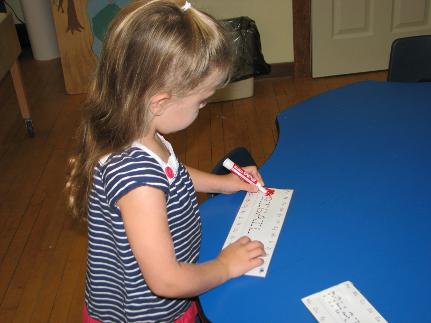
Description: Children are asked to sign in when they arrive at school each day.
Analysis: At the beginning of the year holding a writing utensil in a way that will help achieve the best possible results can by difficult. Holding that utensil to trace lines that create your name can seem even more impossible. Through continued effort children learn that they can hold their markers in a "just right" grip. They also learn that not only can they trace lines to create their names, but that they can form letters and write their names all on their own. Daily repetition and encouragement leads to a "can-do" attitude that aids children in all areas of learning.
