PSELA2d: Employs effective instructional strategies for the development of a broad vocabulary
Evidence 1: Image of Word Wall
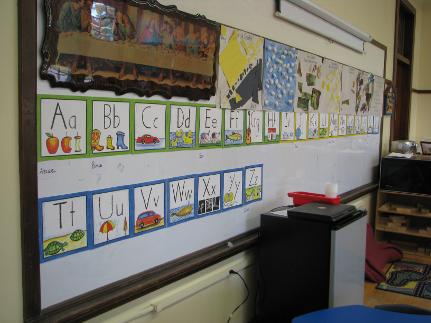
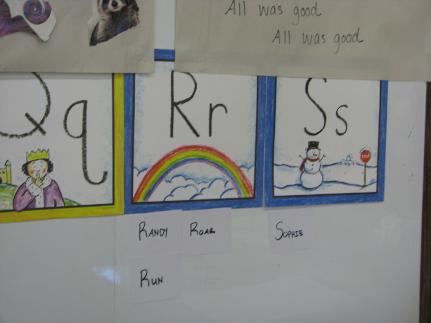
Description: The purpose of one wall in our classroom is to house all of the new words that we learn while at school. There is a basket with 3x5 index cards, tape and markers located on a table near the wall, and every time we hear a new word while reading we write it on a card and place it under the appropriate beginning letter.
Analysis: Vocabulary involves more than just learning new words. In order to effectively build vocabulary children need to not only learn new words, but also make connections between those new words and words already in their vocabulary bank. As children learn about this concept, they move in understanding from "all four legged animals are dogs", to "horse", "moose", etc.
Within my classroom, I have seen this first hand. At the beginning of the year, the three year old's in my group expressed emotions as either happy or sad. As we have read stories, communicated, and learned about facial expression, we have added terms such as "embarrassed", "furious", and "ecstatic".
Evidence 2: Sorting Lesson Plan
Description: When introducing new stories I choose two or three new vocabulary words to introduce to the children.
Analysis: Between the ages of three and five, children learn approximately 1000 new words. Shared book reading aids in this process. As children become active participants in the story telling process, they are able to understand more complex questions, make comparisons and build vocabulary. By identifying key words prior to reading, and allowing the children to discuss their own experiences while reading, connections are made and vocabulary expanded.
