KSELA2: Literature and Media - A wide variety of quality, age-appropriate literature across genres, eras, cultures, and subcultures; literary elements and strategies for textual analysis
Evidence 1: Literature for Children, EDU-2075, Community College of Vermont, Summer 2003, Transcript
Description: Survey of historical and contemporary literature for children. Topics include who and what defines literature as ‘for children’ and how books impact on children’s lives personally, socially, and educationally. Examines censorship and the selection of books for children.
Analysis: One of the components of this course required participants to create a catalog of books for the youngest child through age 18. We had to choose books of varying genres and cultures, and that used various literary techniques. This catalog has become a great resource as I have continued to teach. When issues arise, I can go to this list and choose a book that can aid in resolving the issue.
Evidence 2: Vermont Early Learning Standards
Description: The Vermont Early Learning Standards were created to provide guidance for families, teachers and administrators. The VELS describe guiding principles that serve as the core for making informed decisions about what is developmentally appropriate for young children.
Analysis: The Vermont Early Learning Standards state that, "Literacy is the foundation for creating a well-educated and responsible citizen" (page 10). As educators provide children with a wide assortment of books and reading materials, children receive the tools that will allow them to connect their own lives to far-off places and to new ideas. Teachers can again, aid in this process through using various strategies for textual analysis. For instance, a third grade teacher might select a passage from a story being shared, and ask his/her students to choose a word from the passage that reminds them of an experience that they have had in their lives. Students would choose a word, write about their experience, and then as the teacher re-read the passage, students would listen for the word they used, repeat it and then read their story. In this way students are able to relate to the work being discussed.
Evidence 3: Photograph of Classroom Library
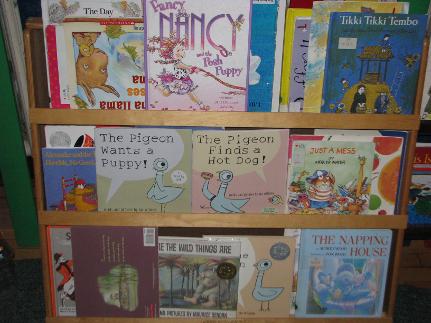
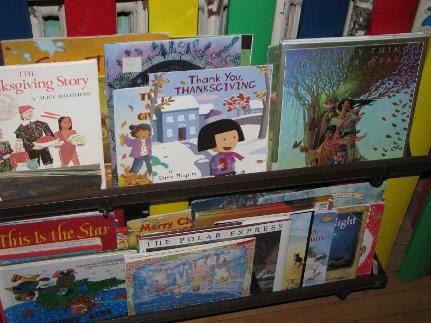
Description: This is a photograph of our classroom reading space.
Analysis: Classrooms that contain books of varying sorts can aid children in learning new words and constructing speech. Books also provide children with opportunities to experience new cultures and can build diversity. Also environments that are filled with books encourage children to become interested in using pictures, letters and words to communicate. In our classroom we have many types of reading materials including works of fiction and non-fiction. We have books with just pictures and books with pictures and words. As we read stories together, we discuss the pictures. We also put our scientific explorer hats on and make predictions about what might happen next. We use pictures to interpret how characters are feeling, and then try to problem-solve or figure out ways to aid that character.
